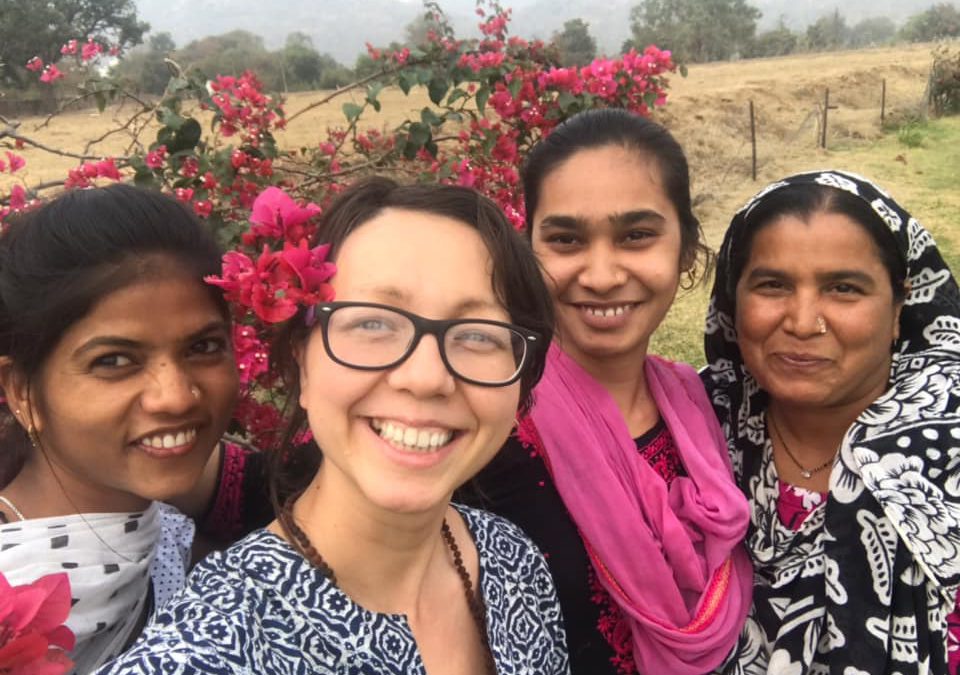
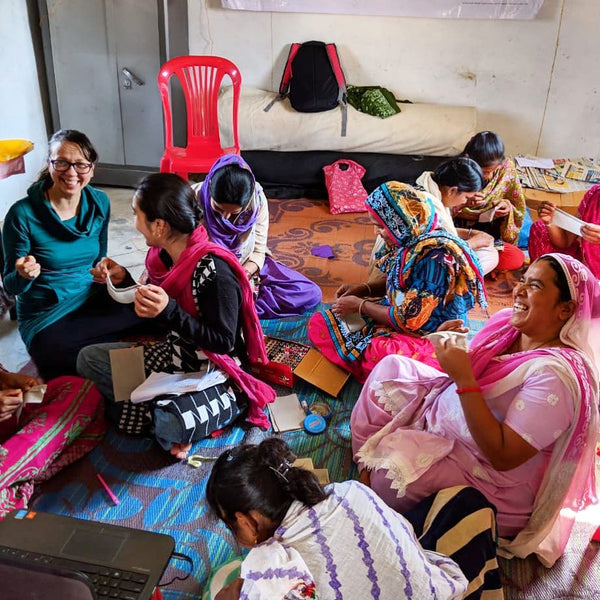
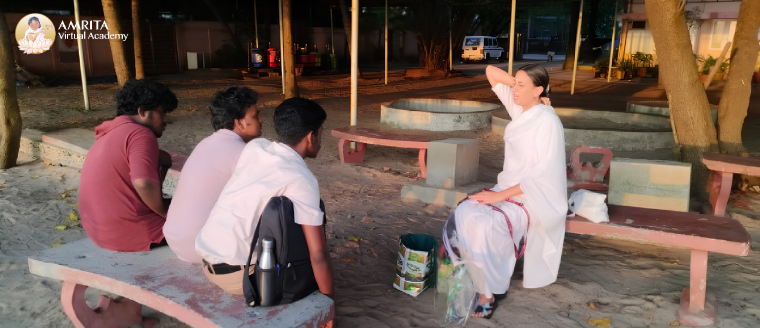
During Amrita Virtual Academy’s Joy of Sharing presentation in 2020, Zhenya Glorka of the sustainable fashion powerhouse glorka presented on her amazing sustainable fashion endeavors in India in collaboration with AMMACHI Labs. Hearing about her ground-breaking travels to the villages in India was an exciting and touching moment for everyone.
“When women of different cultures, age and status come together into a circle to craft, share and co-create – something amazing happens… It’s hard to explain, but it just feels magical…” ~ Zhenya Glorka, founder of glorka.
Learn more about glorka’s collaboration with Ammachi labs in this special YouTube video:
We have exciting news to share! TULA, an Australian ethical clothing brand focused on sustainability and slow fashion, has started production near the Amritapuri ashram in Vallikavu, Kollam, Kerala.
Much like glorka, this venture also involves a collaboration with AMMACHI Labs at Amrita University, Amritapuri campus. TULA is a hub where skilled artisans work together to realize sustainable designs. In their own words, “Tūla the Label began with a simple vision: to create ethical fashion that combines comfort and beauty, crafted with care for both the wearer and the artisans behind the work.”
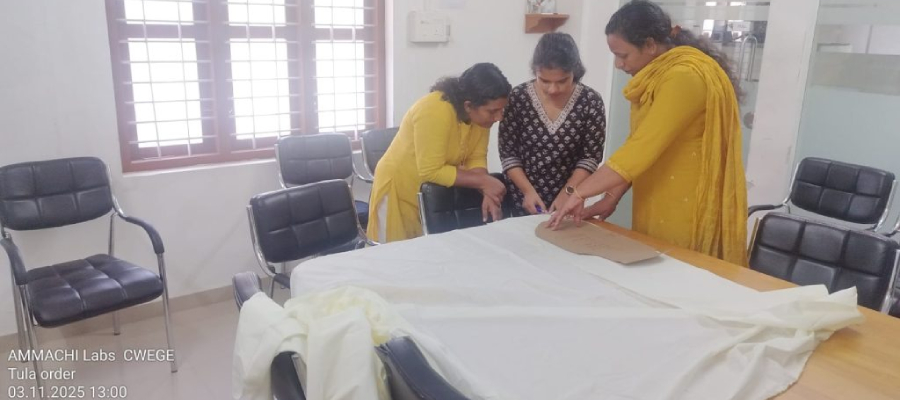
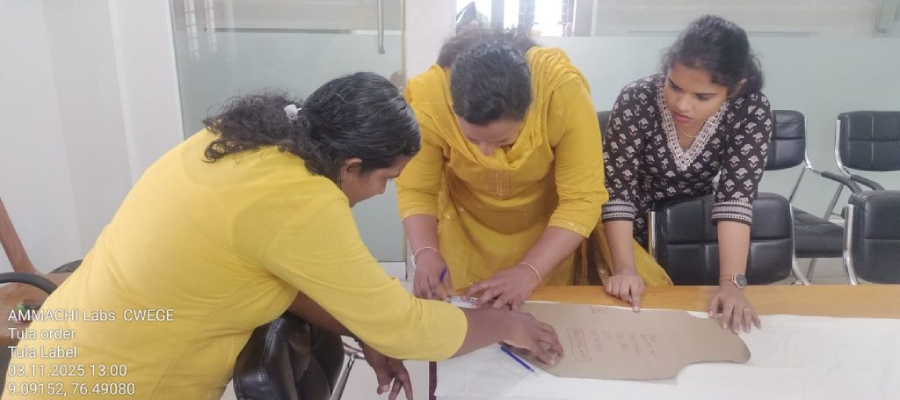
They began by producing the sustainable Boxy Top for their upcoming collection at the Vallikavu location.
Supervised with a focus on precision and minimal fabric wastage, the pattern-cutting process adhered to TULA’s eco-conscious production standards. TULA is committed to expanding its presence in India by seamlessly integrating ethical practices with local craftsmanship. This approach not only maintains their global sustainability vision but also empowers local artisans.
Here at Amrita Virtual Academy we are so excited to learn more about slow fashion and its movement to heal the environment. We love seeing Amma’s vision of sustainability and Women’s Empowerment come to life.
Here at Amrita Virtual Academy, we are always so excited to see positive change in the community, especially when the principles of our courses—love, knowledge, evolution, service & sustainability— radiate out into the world. Here are some amazing local community updates, inspired by Meenamba’s Amrita Upcycling projects.
At Amrita University, Amritapuri campus, located just across the bridge from Amma’s Amritapuri ashram, there was a special week from November 15-20, 2025 to support Women’s Empowerment. At that time, eleven Computer Science & Engineering students successfully connected with a local women’s tailoring unit—a self-help group supporting local women—to support their artisan handicrafts businesses.
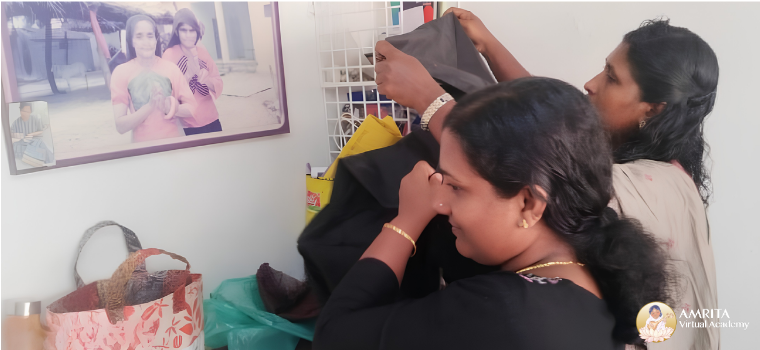
To incorporate an ecological focus into the project, a meeting was held to find reusable materials within the university that could be upcycled. This provided participating women with free resources while also minimizing waste. A solid plan for the regular collection of the selected materials—coffee bags, standard uniforms, lab coats, college lanyards, and old umbrellas—was put in place.
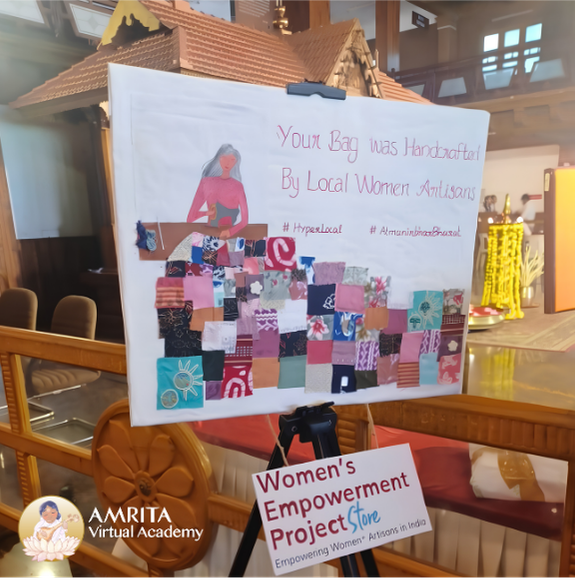
Students supported not only the creation of the goods, but also helped in promoting the artisanal handicrafts across the Amrita University campus. Amrita students designed and displayed promotional posters, boosting the local women’s visibility and expanding their customer base.
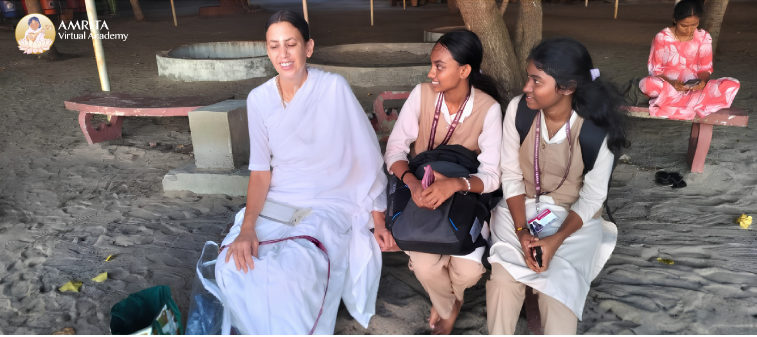
The students also connected with Meenamba, the Amrita Virtual Academy instructor also known as the “Plastic Woman,” who shared her knowledge on upcycling, environmental responsibility, and purposeful living. After seeing her handmade upcycled products, the students committed to starting their own collection drive, beginning with old umbrellas, to support similar projects. This valuable experience highlighted the significance of sustainable practices, social responsibility, and community engagement for the students.
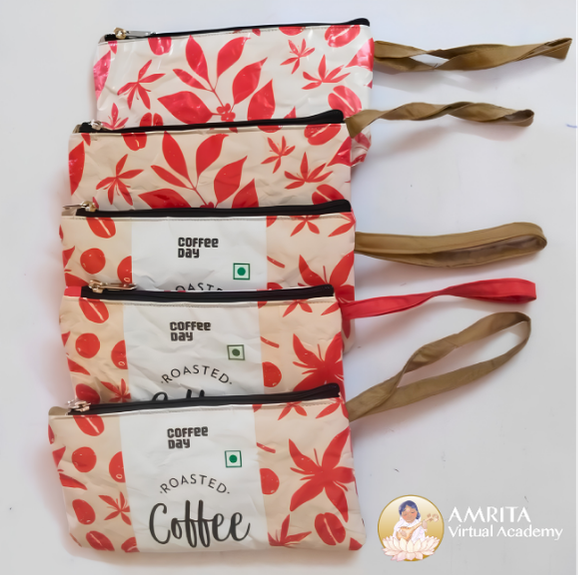
Inspired by Meenamba, Amrita University’s campus also launched another sustainability initiative, focused on collecting empty Coffee Day packets from canteens both on and near the Amritapuri campus. This provides essential raw materials for the local women artisans involved in upcycling projects.
A collection system was established in three campus canteens between November 19 and November 26, 2025. Now operational, volunteers maintain a consistent supply of the raw material through weekly collections. These discarded packets are transformed by the artisans into functional, eco-friendly products.
Beyond reducing campus waste, this effort reinforces Amma’s vision and commitment to empowering women through sustainable livelihoods and responsible production.
And aren’t the purses so cute?
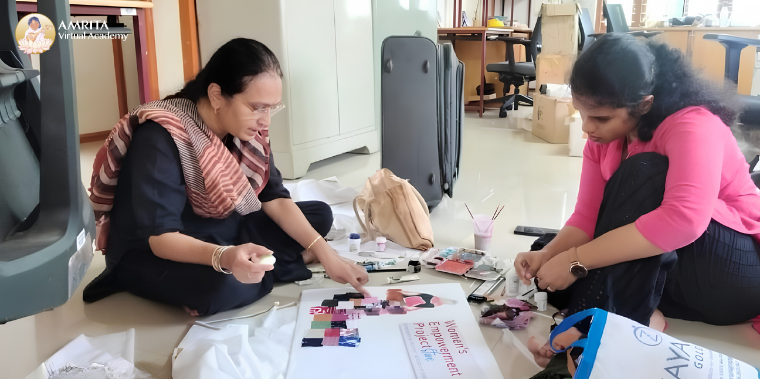
Finally, there was one other notable event during the November 15–20, 2025 Women’s Empowerment week. The Amrita Upcycling Project held a two-day hands-on workshop in Amritapuri to teach participants how to convert everyday waste into functional, eco-friendly products. Two tailoring students learned to craft upcycled pouches from materials like broken umbrella fabric and discarded snack packets. The training emphasized waste reduction and responsible resource use, encouraging participants to identify and creatively reuse plastic items from their own homes. This initiative strengthens local women’s sustainable livelihood capacity and fosters environmental awareness. It also expands the Amrita Upcycling movement as a whole.
We are so proud of everyone involved!
If you would like to join the movement and learn how to make your own tote bag out of recycled materials, you can do so here.
Every year, humans destroy around 10 million hectares of forests, causing huge ecological imbalance that affects earth’s climate and biodiversity. Deforestation has a profound impact on mankind, wildlife, and other life forms in nature.
As deforestation continues, urgent action is needed to protect the planet’s biodiversity and ensure the survival and wellbeing of countless species on earth.
The Civil 20 working group on Sustainable & Resilient Communities (SRC), under the guidance and vision of Amma as Chair of C20 for India’s G20 Presidency, is deeply honored to launch a ‘Global Seedball Campaign’ that will work towards producing and distributing 1 million seeds of hope in the year 2023.
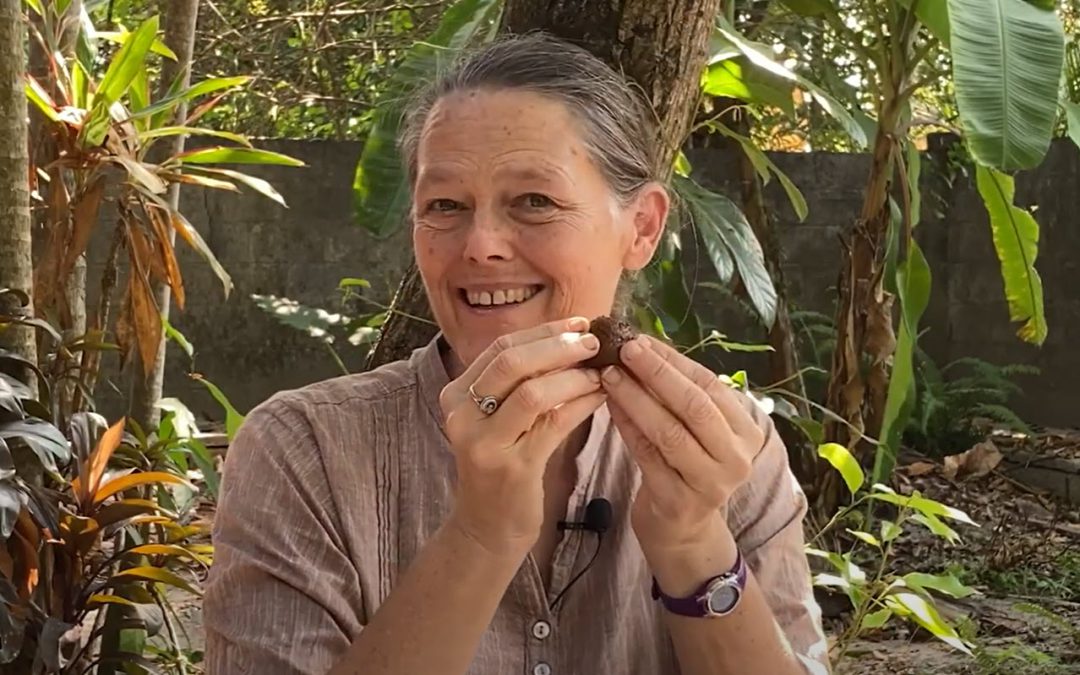
A seedball is made up of soil and seeds, often mixed with clay and other organic materials to hold the ball together. They are designed to be thrown or scattered in areas where vegetation is desired and rely on natural rainfall to germinate and grow into mature plants. This is an ancient technique used for reforestation and soil restoration. Seedballs offer an environmentally friendly and low-cost solution to a global problem and has the potential to make a significant impact on the health and resilience of our planet’s ecosystems.
https://www.youtube.com/watch?v=HsCZbprbLr8
Amrita Virtual Academy offers this video tutorial with step-by-step instructions to join in on the challenge. May the spread of seedballs and increased awareness of the importance of trees lead to restoring ecological balance.
When the 2023 G20 Summit convenes on September 9-10 in New Delhi, the leaders of the world’s major economies, comprising 19 countries and the European Union, will address the major global issues of our time.
The Government of India holds the G20 presidency for 2023, and has appointed Amma (Mata Amritanandamayi) as the chair of an official G20 engagement group known as Civil20, or C20. As a platform for Civil Society Organizations (CSOs), C20 will bring forth non-government and non-business voices and present specific policy recommendations to the world leaders gathering in New Delhi for this year’s G20 summit.
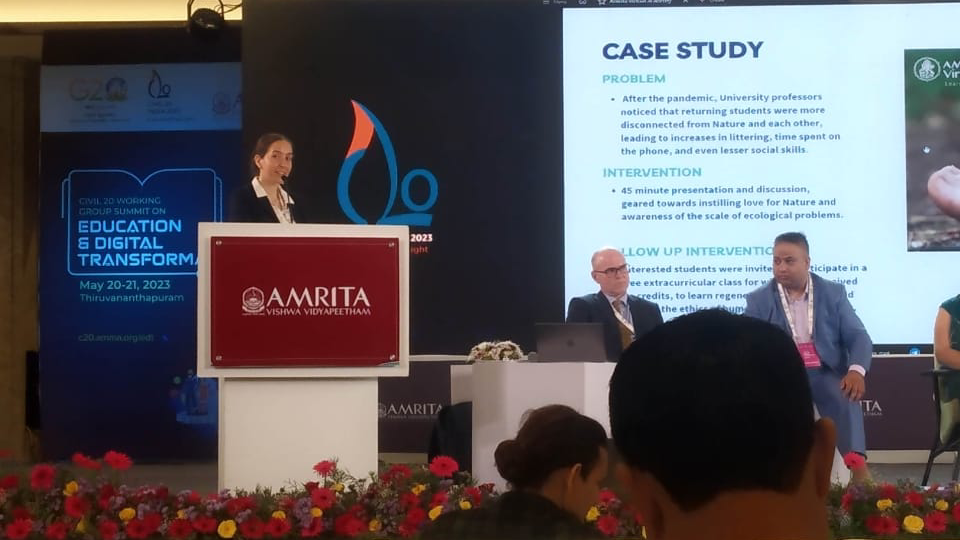
Since Amma’s appointment as C20 Chair, numerous C20 conferences have catalyzed new levels of collaboration and problem solving among civil organizations. It is within this significant global framework that the C20 Education & Digital Transformation Summit was held on May 20-21, 2023 in Trivandrum, Kerala. The event featured 66 speaker presentations by prominent leaders in this field—including one highlighting the work and vision of Amrita Virtual Academy (AVA).
AVA educator and program coordinator Chandrika Suliman began her presentation by sharing what makes Amrita Virtual Academy unique: that every course offering is rooted in spiritual values. As a result, AVA students experience growth well beyond the knowledge and skills acquired.
Chandrika then presented a case study demonstrating the power of such an approach. The case study highlighted a collaboration between AVA and Amrita University, initiated during the pandemic, when Amrita University professors observed that their Computer Science students had become disconnected from the natural world. The professors noticed campus littering was on the rise. And with students glued to their laptop and phone screens, social skills had also diminished. In hopes of reversing this trend, Chandrika was requested to give a 45-minute presentation on love for nature. Amazingly, just after the presentation 200 of the 400 attendees signed up to learn the principles of Regenerative Agriculture through an AVA Amritaculture curriculum.
Of those students who were accepted into the pilot program, 72% not only completed the course, but also wanted to continue learning and become youth leaders in the field of ecology and regenerative agriculture.
“People are longing to return to a harmonious relationship with nature,” Chandrika observed. “In this time of climate crisis, people are longing to move beyond the feelings of despair and hopelessness, and into an experience of connection and empowerment. As Amma encourages, ‘Light your little candle and step forward.’ This pilot course was a beautiful way to help people know how to do that.”
She continued, “What I learned from those 200 students, who were so eager to contribute back to nature, is that there’s still hope. There’s still hope, and we just need to be intelligent and loving and keep moving forward.”
By Amma’s grace, may the course offerings of Amrita Virtual Academy continue to ignite such optimism and determination within us all.